
Paris 1940 Occupation Audio Walking Tour
A sober walk through the fall of Paris in 1940, from the Opéra past the Champs-Élysées, the Arc de Triomphe and the Eiffel Tower to Napoleon's tomb.
- 7 stops and 14 minutes of stories, told as you reach each place
- The intro and stop 1 are free in the app: try before you buy
- Download before you go; the audio plays without signal (the street map needs a connection)
- Walking with friends? Pick 1 to 10 seats; everyone hears each stop on their own phone, at the same moment
30 seconds of the real narration
Plays in the free Walk With Me app on iPhone and Android.
The story in order
- 14 June 1940La Madeleine
German troops enter Paris, declared an open city, and begin an occupation lasting more than four years. - June 1940Champs-Élysées
German troops parade down the Champs-Élysées for propaganda cameras; accounts differ on the exact day. - 23 June 1940Opéra Garnier
The day after the armistice, Hitler lands at dawn and begins a three-hour tour here; most accounts give this date. - 23 June 1940Trocadéro Esplanade
His photographer, Heinrich Hoffmann, photographs him on this terrace with the tower behind, an image made for propaganda. - 11 November 1940Arc de Triomphe
On Armistice Day, school and university students defy a ban to gather here against the occupation, and are harshly dispersed. - 15 December 1940Napoleon's Tomb, Invalides
On Hitler's order, the remains of Napoleon's son arrive from Vienna, a century to the day after Napoleon's own return. - 25 August 1944Napoleon's Tomb, Invalides
Paris is liberated, still standing: Hitler's order to wreck the city before retreating was never carried out.
About this tour
On foot, at your own pace, you see what a speeding car could not: how close these places are, and how the city filled back up after that empty morning. You walk past the Arc where students defied a ban and the avenue where a parade was filmed for propaganda, and you end at a dome in a city that survived an order to destroy it. And you see Paris as it is now: crowded, noisy and its own again. If you'd like company on your next walk, open the Walk With Me live map to find other people out walking Paris.
The route
8.1 km in walking order from Opéra Garnier to Napoleon's Tomb, Invalides. Stop 1 is free in the app.
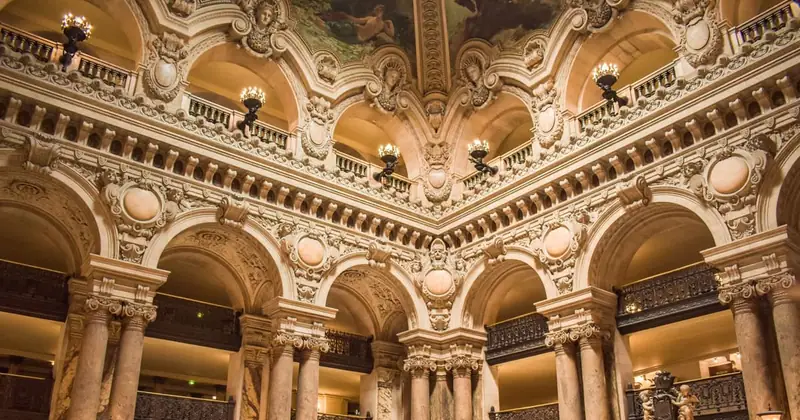
- 1Opéra GarnierThe gilded opera house that came first on Hitler's dawn tour, and an old attendant's quiet answer to the conqueror.€25 to go in, optional
- 2La MadeleineThe temple-fronted church at the head of rue Royale, and what four years of occupation would mean for the people living here.
- 3Champs-ÉlyséesThe avenue where German troops marched for the newsreel cameras, and a second parade Hitler weighed up that morning.
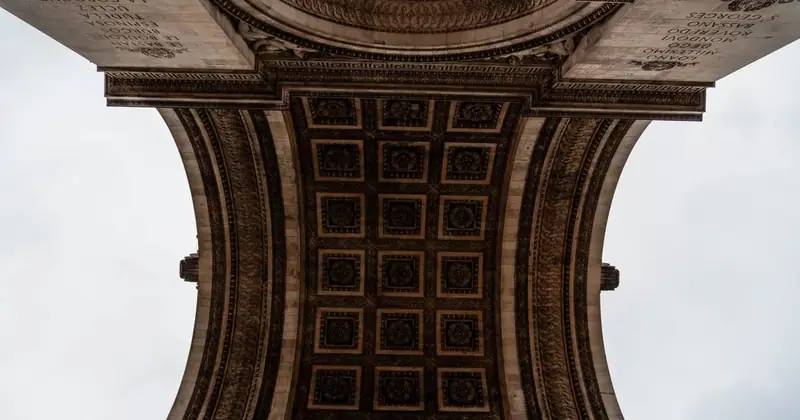
- 4Arc de TriompheThe arch over the Unknown Soldier, visited by the victor at dawn, and where Parisians pushed back that autumn.€16 to go in, optional
- 5Trocadéro EsplanadeThe terrace where the best-known photograph of that morning was taken, and what the picture chose to leave out.
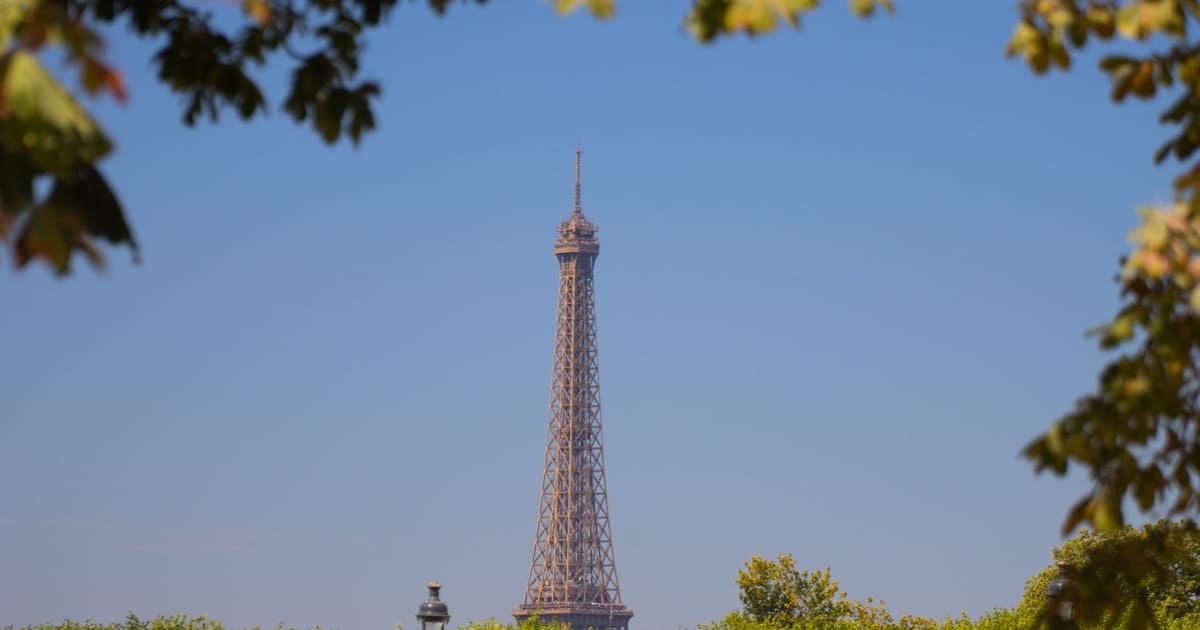
- 6Eiffel Tower, Champ de MarsThe lawns below the tower, a famous story about its lifts tested against the record, and a darker chapter nearby.€35 to go in, optional
- 7Napoleon's Tomb, InvalidesThe golden dome over Napoleon's tomb, where Hitler lingered, a strange return from Vienna, and how Paris survived 1944.€14 to go in, optional
Hear stop 1: Opéra Garnier
The first 30 seconds, exactly as you'll hear them on the street.
You're on the Place de l'Opéra, facing the steps and the great gilded front of the Palais Garnier, still an opera house today. The grand staircase is inside, on a ticketed visit, but this is the front the visitors walked through that morning.
This was the first thing Hitler wanted to see. He arrived in a convoy of three Mercedes cars. Hitler sat in front beside the driver; behind him were Albert Speer and the sculptor Arno Breker, then the architect Hermann Giesler and the adjutants. The artists wore field-grey uniforms.
Before you go
This is a long walk: 8.1 kilometers, about two hours of walking, and closer to three hours with the stops. Wear comfortable shoes and take water. There are plenty of cafés along the way, especially on the Champs-Élysées and around the Trocadéro, so plan a break. It is mostly flat, with a gentle climb up the Champs-Élysées and steps down from the Trocadéro. Start at Opéra metro, on lines 3, 7 and 8. Finish at Varenne metro, on line 13, or La Tour-Maubourg, on line 8, both a few minutes from the dome. One note on sources: much of what is known about that morning comes from Albert Speer, Hitler's architect, who rode in the car. He wrote his memoir decades later, partly to clean up his own record, so the walk tells you when a detail rests on his word alone. Accounts also disagree on the exact order of the stops, so the walk takes them in the order the streets allow.
What costs extra
4 stops have a ticket to go inside. The story plays outside, so going in is your choice.
| Stop | Inside | Ticket from |
|---|---|---|
| 1. Opéra Garnier | Optional | €25 |
| 4. Arc de Triomphe | Optional | €16 |
| 6. Eiffel Tower, Champ de Mars | Optional | €35 |
| 7. Napoleon's Tomb, Invalides | Optional | €14 |
Cheaper in a bundle
Before you walk Paris
Photos: Magda Ehlers / Pexels.