

Paris Les Misérables Audio Walking Tour
Walk the real rising of June 1832 and Victor Hugo's novel, from the Bastille and Hugo's house to Saint-Merri, Javert's bridge and Hugo's tomb.
- 7 stops and 19 minutes of stories, told as you reach each place
- The intro and stop 1 are free in the app: try before you buy
- Download before you go; the audio plays without signal (the street map needs a connection)
- Walking with friends? Pick 1 to 10 seats; everyone hears each stop on their own phone, at the same moment
30 seconds of the real narration
Plays in the free Walk With Me app on iPhone and Android.
The story in order
- 1 June 1832Place de la Bastille
General Lamarque, an opposition deputy, dies of cholera in the epidemic that killed thousands that spring. - 5 June 1832Place de la Bastille
His funeral procession reaches the square; by about five in the afternoon the dragoons advance and the rising begins. - 6 June 1832Cloître Saint-Merri
The army and National Guard take the last stronghold by early evening; around 800 killed or wounded is the usual figure, but estimates vary widely. - 8 October 1832Maison de Victor Hugo
Four months after the rising, Hugo moves into the Place Royale, today's Place des Vosges, and stays until 1848. - 17 November 1845Maison de Victor Hugo
In this apartment he begins Les Misères, the first version of Les Misérables. - 1862Rue de la Chanvrerie (site)
The novel is published, thirty years on, with its barricade set in a street that had already vanished. - 1 June 1885Panthéon
More than a million people watch Hugo's pauper's hearse cross Paris from the Arc de Triomphe to the Panthéon.
About this tour
On foot, you feel how small this rebellion's world was. From the funeral at the Bastille to the last stand at Saint-Merri is a short walk, and the whole drama of the novel fits between a market street and a riverbank. Walking it, you see where history stops and Hugo begins. If you'd like company along the way, open the Walk With Me live map to find other people out walking Paris.
The route
5.4 km in walking order from Place de la Bastille to Panthéon. Stop 1 is free in the app.
- 1Place de la BastilleThe July Column rising over the square, an elephant Hugo gave to Gavroche, and the general's funeral that set Paris alight in 1832.Free in the app
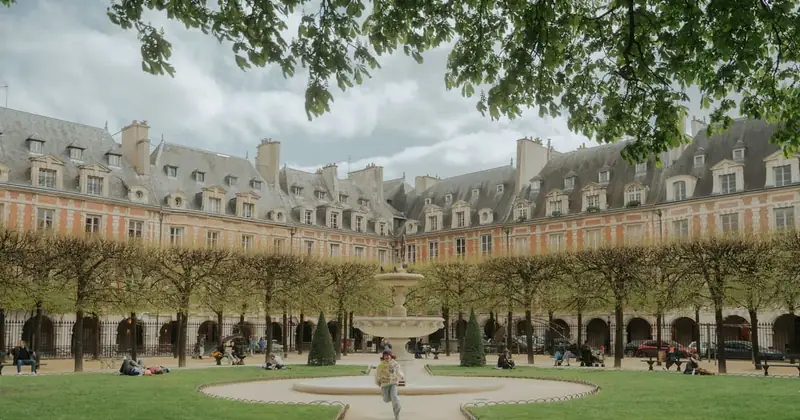
- 2Maison de Victor HugoHugo's apartment on the arcaded Place des Vosges, now a museum, where a book first called Les Misères was begun.
- 3Cloître Saint-MerriThe Gothic church near the Pompidou where the last rebels of June 1832 made their stand, and why the death toll is still disputed.
- 4Rue de la Chanvrerie (site)A stretch of Rue Rambuteau where Hugo tells readers to stand, a vanished street, and the barricade at the heart of the novel.
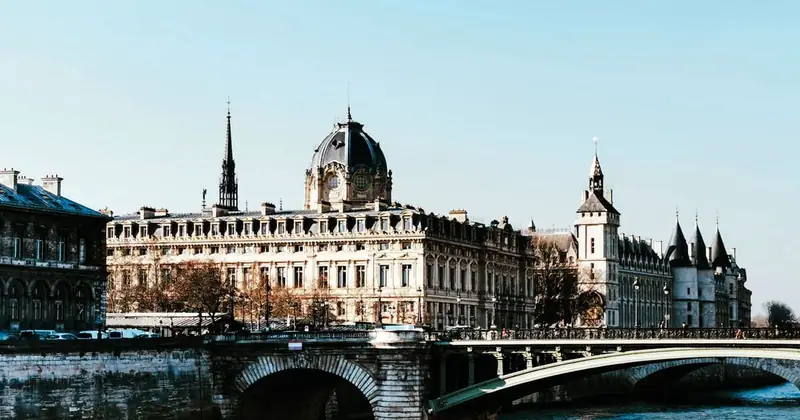
- 5Pont Notre-Dame (Javert)The quay at the angle of the Pont Notre-Dame, where Hugo brings Javert in the small hours of 7 June.
- 6Rue Cujas (old Rue des Grès)A university street once called Rue des Grès, a flashback to the students' meeting room, and the pun in their name.
- 7PanthéonThe domed temple to great men where Hugo lies, the pauper's hearse he asked for, and the crowd that followed it.€13 to go in, optional
Where the story happens
Each stop, the moment of the story it belongs to, and what is there today.
| Stop | In the story | Today |
|---|---|---|
| 1. Place de la Bastille | Gavroche's home inside the plaster elephant, and the riot at Lamarque's funeral. | The July Column, for the dead of July 1830; the elephant was torn down in 1846. |
| 2. Maison de Victor Hugo | No scene happens here: this is where Hugo lived and began the novel. | The Maison de Victor Hugo museum, closed on Mondays. |
| 3. Cloître Saint-Merri | Named in passing: Hugo says the real fighting here outshone his own barricade. | The church of Saint-Merri, beside the Centre Pompidou and the Stravinsky fountain. |
| 4. Rue de la Chanvrerie (site) | The barricade at the Corinthe wine shop: Éponine, Gavroche, and Valjean's choice about Javert. | Rue Rambuteau; the old street is gone and nothing marks the spot. |
| 5. Pont Notre-Dame (Javert) | Javert's last night, after a report written at the police post on the Châtelet. | The quay at the Pont Notre-Dame; the mill and the rapids are long gone. |
| 6. Rue Cujas (old Rue des Grès) | The Café Musain's back room, where the Friends of the A B C meet. | Rue Cujas, beside the Sorbonne's law buildings; the café never existed. |
| 7. Panthéon | No scene happens here: Hugo's own funeral in 1885 closes the walk. | The Panthéon, where Hugo is buried; going inside is ticketed. |
Before you go
The walking takes about an hour and a quarter. With the stories, allow two and a half hours. Two legs are long, around fifteen minutes each: across the Marais, and from the river up into the Latin Quarter. The route is mostly flat, with a gentle climb at the end to the Panthéon. Start at Bastille metro station, lines 1, 5 and 8. At the finish, Luxembourg station on RER line B is about five minutes away, or Cardinal Lemoine metro. The Victor Hugo house museum is closed on Mondays, and the Panthéon charges for entry; check times and prices before you go. If you love the novel, one detour is worth knowing: the Paris sewers museum near the Pont de l'Alma, about four kilometers west, where you can picture Jean Valjean's escape underground.
What costs extra
1 stop has a ticket to go inside. The story plays outside, so going in is your choice.
| Stop | Inside | Ticket from |
|---|---|---|
| 7. Panthéon | Optional | €13 |